Can Christians Practice Yoga Safely?
Can Christians practice yoga safely? Explore origins, Kundalini concerns, and how to test spiritual practices so our bodies worship Christ, not a rival power.
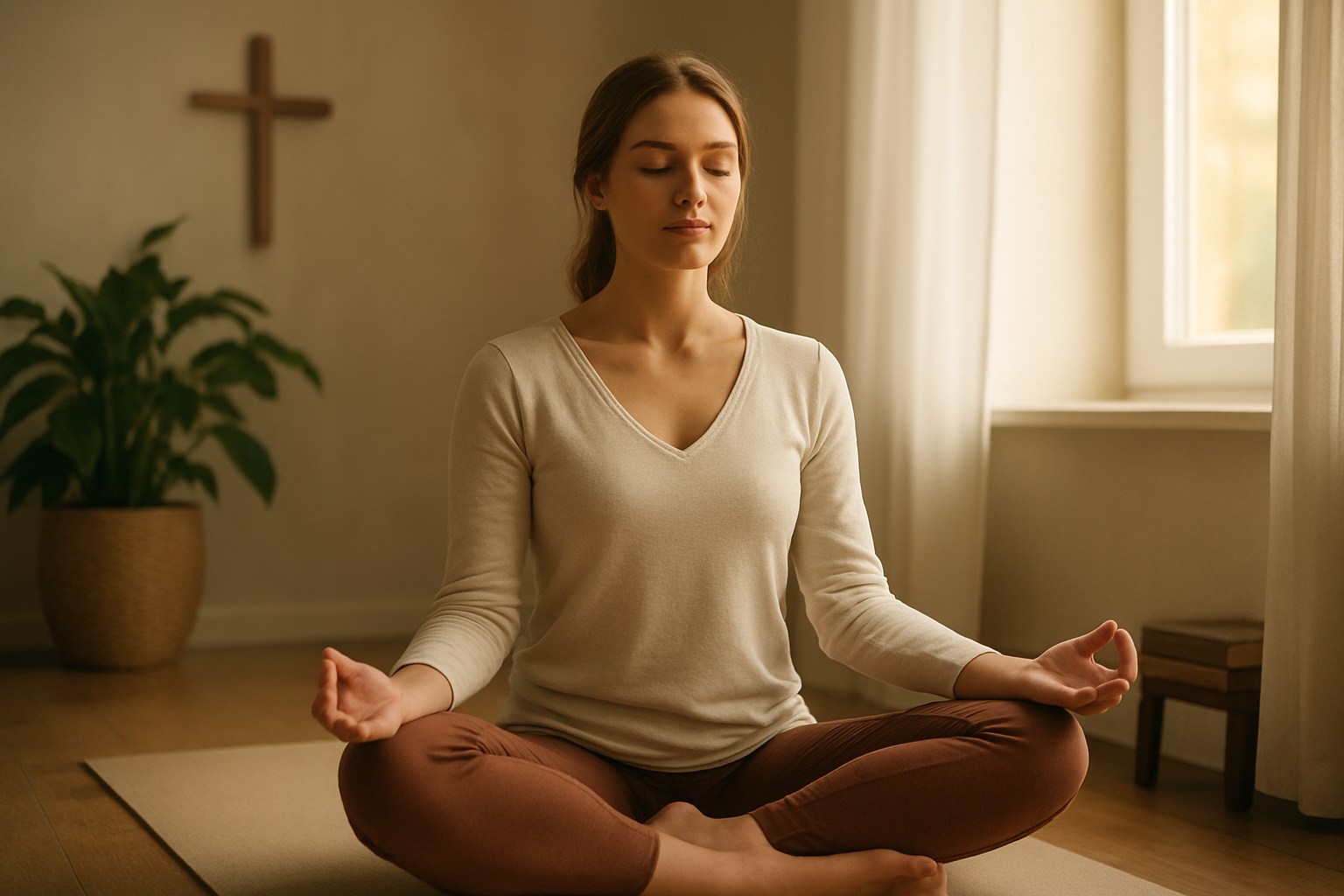
Why Christians Should Think Twice About Yoga
Many Christians try yoga simply for health. It’s easy to empathize with the desire to breathe more deeply and move more freely. Yet one of the clearest warnings from those who have lived inside yoga traditions is that "knowledge alone is not enough."
That phrase matters pastorally: cognitive understanding does not inoculate us against deeper spiritual currents. You can know names and history and still be shaped by the spiritual logic a practice carries.
Behind the Words: Understanding origins matters because practices embody stories and aims that shape what we worship.
The Heart of It: Practices carry narratives; they form allegiance.
Try This: Imagine a practice that began as a devotional enactment toward a specific deity. If we adopt its movements without understanding the story they perform, we risk participating in that story.
A few concrete details from people who grew up within yoga culture help clarify what’s at stake. In some places where yoga began, practitioners rise early and do poses while chanting mantras; they even mark the body as a reminder—there are the three lines of ash on the forehead that identify allegiance and devotion. These are not neutral gestures.
Another metaphor used by insiders describes kundalini as a coiled serpent at the base of the spine. The spiritual goal of awakening that power is not merely relaxation; it is an attempt to unite the individual with an impersonal cosmic force.
We must also wrestle with a harder line often spoken plainly: "it's still worship unto Satan." That stark phrase needs pastoral unpacking: it is a warning that participating in ritual actions whose explicit intent is worship—whether understood or not—can count as worship, and worship shapes the heart.
Scripture helps us parse this, not as a legalistic hammer but as a guard rail to protect devotion.
"You shall have no other gods before me." — Exodus 20:3
Behind that law was a covenant people being taught to live out of one allegiance. We are called to ask: does a practice orient me toward Jesus, or toward something else?
Try This: Before stepping onto a mat, ask: Who is the practice ultimately addressing? What language or imagery accompanies the movements? Are there chants, references to an inner cosmic force, or named deities embedded in the sequence? If the honest answer points outside the Christian confession, be cautious.
What Is Kundalini Yoga and Why It Matters
If yoga were only about stretching, the question would be simpler. But not all yoga practices are equivalent. Kundalini yoga, in particular, carries explicit spiritual goals. Those who teach or practice it in its traditional forms aim to awaken internal energies and move toward union with a universal force.
One insider described the process as a rising of that coiled serpent up the spine until it merges with the crown—what yogic systems call the crown chakra. The promise is a transcendent state, a merging with a divine principle that is not the personal God of Scripture but an impersonal life force.
Behind the Words: Discern the true aim of a spiritual discipline: its effect on the soul matters more than its physical benefit.
The Heart of It: A practice’s goal—what it forms us to seek—matters more than its visible perks.
Try This: Picture someone who began with gentle postures and healthy breathing, then found the practice opening doors they never intended—visions, altered states, or a diminishing of the centrality of Christ. If a practice opens unexpected spiritual experiences, bring those experiences to pastoral care.
That scenario is not merely a scare story; it’s the pattern some former instructors describe. Steps that begin with breathwork and stretching can, when combined with certain meditations or mantras, become a ladder into altered states. In those states the person is not only calmer—they can be reoriented into a different spiritual grammar.
We must also consider the cultural packaging of Kundalini. Within its original context the exercises are devotional tools for gods and cosmic principles. For a person in America—especially one raised in the Western mind—those elements can be hidden behind a veneer of wellness. But the classical aim remains: union with an inner divinity.
Paul’s pastoral wisdom about preserving the soul’s allegiance is a helpful lens.
"Do not be conformed to this world, but be transformed by the renewal of your mind..." — Romans 12:2
Transformation happens when practices shape our imagination. If a discipline implicitly teaches pantheism (God is an impersonal force we find within), it competes with the gospel’s centripetal truth: God is Creator, other than us, and draws us to Himself.
So what do we do? First, inform your practice. If a teacher uses mantras, mudras, or specific devotional imagery, ask what those mean. If the class requires surrender to an inner force or the naming of energies, that's theological territory—not neutral exercise. Second, choose or create Christian-minded alternatives—breathwork and stretching can be reframed with Scripture, prayerful attention, and Christ-centered meditation.
Third, hold community accountability. Spiritual practices in private can go unmonitored; practiced within a church or with a trusted Christian mentor, they can be tested and clarified.
When a Workout Becomes Worship
Why do gestures matter? Because bodies pray. We learn to bow, kneel, and raise hands—our bodies learn theology. So when a practice formed by another religious story is adopted uncritically, our bodies are rehearsing a rival tale.
One teacher observed: "yoga literally means to be yoked or joined in union." To be yoked is to be joined to something—and joining has consequences.
Behind the Words: Our bodies bear theology: repeated posture and breath teach our hearts where to belong.
The Heart of It: Repetition forms desire; desire wires worship.
Try This: Picture a classroom where everyone moves through a series of named poses that, in origin, enact stories of gods who acted in particular ways. Repeating those actions daily is like learning a creed by muscle memory.
This is how seemingly neutral practices become formative. Repetition creates habit, habit shapes desire, desire wires worship. That’s why leaders who have come out of the yoga world warn: people started with good intentions for health, and yet were drawn into things they would not have asked for.
We must name another hard pastoral truth: for some, participation in these rituals amounted to participation in idolatry. The blunt phrasing—"it's still worship unto Satan"—forces us to reckon with the real possibility that ritual can attach us to powers contrary to Christ.
How should we respond as a faithful community?
- Learn the language. Know what mantras, mudras, chakras, and kundalini mean. Ignorance makes us vulnerable.
- Replace, don’t simply remove. If breathwork helps you sleep, learn Christian breath prayers. If gentle movement helps your body, practice stretches with Scripture and thanksgiving.
- Test experiences. If a practice opens unexpected visions or strong emotional shifts, bring that into pastoral care and spiritual direction.
This is not a call to fear every new wellness trend. There is legitimate wisdom in caring for the body. But it is a call to vigilance. We are creatures formed to worship; our habits will worship something. The question is which God or power we are forming our souls to love.
Behind the Words: Exodus 20:3 originally addressed Israel inside a polytheistic world where neighboring peoples had many gods and cult practices. The command protected the covenant identity of a people called to belong to Yahweh alone.
The Heart of It: Worship forms identity; guarding against idolatry protects our relationship with the living God.
Try This: Picture your morning routine. If a particular posture, chant, or mantra is part of it, ask: who am I orienting myself toward in that moment? Reframe the habit—use a phrase of Scripture, a name of Jesus, or a short breath prayer instead.
Common Misunderstanding: Some think intention alone cleanses action. Intention does not automatically neutralize embedded spiritual meanings.
Behind the Words: 1 John 4:1 was written to a church facing deceptive spirits. It urged believers to test teachings because not every spirit aligns with Christ.
The Heart of It: We are called to test practices and experiences, not accept them by default.
Try This: Before continuing any spiritual-yet-secular practice, ask three questions out loud: 1) Does this teach me to worship Jesus? 2) Does this undermine the gospel’s main claims? 3) Who benefits spiritually from my participation? Then discuss your answers with a mature believer.
We live in a world where wellness, meaning, and longing overlap. Christianity does not fear health or rest; it celebrates embodied flourishing. But we also know the soul is formed by what we repeatedly practice.
So let us be people who choose practices with eyes open—who ask what the posture conveys, test experiences by Scripture, and form our bodies into worship of Jesus. If you’ve practiced yoga and now feel unsettled, bring it to the Lord and to wise community. Repentance and reorientation are not failure but a return to a truer practice: one that glorifies the Creator through grateful bodies.
We owe one another clarity and compassion in these conversations. Walk with fellow believers, ask questions, and pursue practices that draw you nearer to the Father, the Son, and the Spirit.
Key Takeaways
- Understand the spiritual implications of yoga poses.
- Discern the cultural origins of practices before adopting them.
- Recognize that intentions do not override spiritual significance.
- Engage in personal reflection regarding the practices you participate in.
- Seek to balance physical wellness with Biblical teachings.
Notable Quotes
"Intentions are not powerful enough to purify all actions."
"Even in India, where yoga comes from, it has a spiritual significance that is often ignored."
"Yoga isn't just stretching; it embodies deep spiritual concepts tied to Hinduism."