Build on the Rock: Foundations That Last
Is your life built to withstand the storms? Discover whether you need renovation or reconstruction—and how faithful community and Christ as cornerstone create an unshakable foundation.
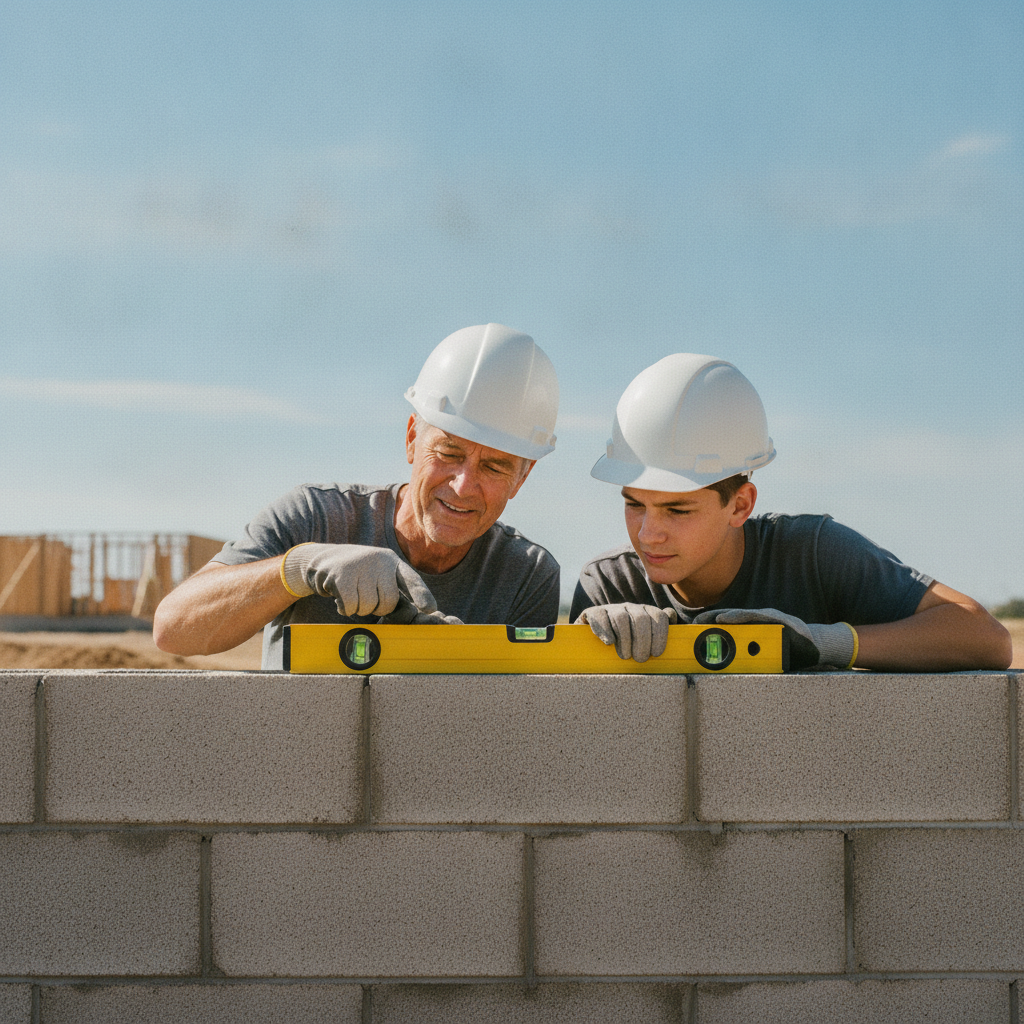
Why is a solid spiritual foundation non-negotiable?
We are tempted to think faith is mainly about moments—mountaintop decisions, inspiring sermons, emotional worship nights. Those matter, but they are not the foundation. The foundation is the daily, small, stubborn repetition of truth that shapes us from the inside out. When the storms hit—loss, betrayal, chronic weakness—what holds you won't be your feelings. It will be where you stand at 6 a.m. when no one sees you, and the beliefs you quietly rehearse over and over.
"Therefore everyone who hears these words of mine and does them will be like a wise man who built his house on the rock." — Matthew 7:24
The quote above is not decoration; it is diagnostic. Jesus frames wisdom as obedience: hearing plus doing. The promise isn't that the storm won't come, but that obedience secures stability when it does.
The Heart of It: Jesus is the only sure foundation. Jesus — his words and his life — are the ground that holds when everything else shifts.
Behind the Words: Matthew’s Gospel preserves Jesus' teaching recorded during the Sermon on the Mount, a collection of ethical, spiritual, and kingdom instructions aimed at shaping a community to live under God's reign amid opposition. The original listeners were ordinary people wrestling with daily fears and Roman pressures; Jesus' call to obedience was practical and costly.
Try This: Picture the next time a moral compromise looks convenient—at work, in a relationship, online. Instead of rationalizing, speak aloud a sentence of Scripture you’ve memorized. Let that small act be a brick laid in the foundation.
Common misunderstanding: People often think being "on the rock" is primarily about a one-time decision. It's not. The wise builder hears and does—repeatedly.
When should you reconstruct versus renovate your faith?
There are two kinds of spiritual work: renovation and reconstruction. Renovation tweaks; reconstruction demolishes and rebuilds from deeper down. Both can be holy. Both have a cost. Understanding which you need is urgent because some damage worsens with delay.
The Heart of It: Not every broken thing needs tearing down, but every wrong foundation must be fixed.
Behind the Words: If the problem is cosmetic—habits that need refining—you can renovate. But if the root belief system is built on lies, cultural religion, or fear, it will keep producing the same failures until you are willing to start over.
Try This: Ask whether your pattern of sin is time-limited (renovation) or generational/structural (reconstruction). Write down recurring failures and trace them to the beliefs, loyalties, or stories that feed them.
You will hear faith-talk that sounds attractive but is shallow. Remember this hard saying: "You cannot cheat on your foundation." Building shortcuts—compromise in small habits, tolerating false teaching, pretending sin has no consequence—saves money and time in the present but incurs catastrophic interest later. The image of a real estate inspection revealing water damage is a moral mirror: when we glimpse water seeping into our spiritual roots, cowardice or convenience might whisper, "Keep living this way; it's easier." Don’t listen.
Imagine sitting in a quiet room with your Bible and a notepad like a mechanic looking over blueprints. What would your life require to be safe in a storm? What practices would a builder of integrity insist on? The parable forces us to choose: wisdom is obedience, not merely information.
Sometimes God allows what is broken to be broken so the true foundation can be set. That patient, repetitive work is reconstruction done deliberately: listening repetitively to sound teaching, memorizing truths, refusing the old tapes of the past.
Violent brokenness can be met by astonishing grace. Miracles do not replace the need for a solid foundation, but they confirm that God rebuilds in astonishing ways.
When should you demolish? When family patterns or old belief systems continue to define you negatively—when your emotional reflexes, default loyalties, or identity are rooted in shame, anger, or religious performance. That is reconstruction. It will hurt.
When should you renovate? When you are basically aligned with kingdom truth—loving Jesus, following Scripture, bearing fruit—but you need better tools, new disciplines, more maturity. Renovation is patching the roof instead of replacing the trusses.
A practical scene: you wake to the sound of rain on a metal roof. The faucet drips in the kitchen, and you realize the house still stands. You could ignore the drip; or you could climb into the attic with a flashlight and fix the leak now. Renovation is researching the right materials and patching the roof. Reconstruction is knocking the roof off and replacing termite-eaten trusses. Both require courage, but reconstruction demands surrender.
Behind the Words: Daniel 10 records a prophetic struggle where an angel explains that spiritual opposition delayed a message until heavenly help arrived. The scene shows that spiritual conflict often aligns with seasons of preparation.
The Heart of It: If God is commissioning a new assignment in your life, be prepared for a spiritual fight that precedes breakthrough; sometimes you must be repositioned before promotion.
Try This: Picture your life as a construction site. What conversations, relationships, or teachings need to be removed before the builders can lay a new foundation? Write them down, pray, and identify one concrete step this week toward repair.
Common misunderstanding: People assume spiritual warfare targets only visible sin. Often it's about displacement—repositioning you to receive a new foundation.
How does community guard and grow that foundation?
Loneliness weakens foundations. We learn tricks to survive alone—consolations that masquerade as strength but are actually coping. Community matters because it shapes the habits, loyalties, and honest speech that hold a foundation together. The point is not mere attendance; it's intentional, faith-filled presence with others who read the blueprints of faith with you.
"They devoted themselves to the apostles' teaching and to fellowship, to the breaking of bread and to prayer." — Acts 2:42
Acts 2:42 describes the early church's rhythms: teaching, shared life, worship, and prayer. Those practices formed a counterculture of dependence on God and one another, not isolation.
The Heart of It: Community is not optional; it is a structural support for growth and protection.
Behind the Words: The early church in Acts gathered, prayed, and waited together. Their togetherness was the soil in which instruction and power took root.
Try This: Invite someone into your life rhythm—share a struggle, read Scripture together, or simply show up for one another when storms hit. Call one person who has encouraged you before. Invite them for coffee and confess one small spiritual failure—not to be shamed, but to be helped. Let accountability be the mortar between your bricks.
Think of a night when you could barely keep your eyes open from grief. Now picture two friends who refuse to leave your house, who pray awkwardly, who sing off-key, who hold you while you weep. That is the stubborn, messy community that keeps a foundation from crumbling. It’s also the context in which angels and revelation often arrive—the Daniel pattern of wrestling and the Acts pattern of waiting together.
Community also calls us out of dysfunction. A dysfunctional family system trains you to live around problems rather than fix them. Community that loves you enough to tell the truth helps you pay the cost of repair, rather than settle for the comfort of dysfunction.
A concrete picture: a small group meets around a dining table. Someone shares a wound; others refuse easy answers. They pray, bring Scripture, and later that week one person brings practical help—childcare, a meal, a repairman's number. That table is the foundation's firewall.
Hard saying unpacked: "You cannot be laid back." If you remain passive, the cost of repair increases. Community helps with momentum. People who hide in isolation often wait until damage is catastrophic. We must refuse that trajectory.
Behind the Words: Acts 2 describes believers gathering in one place, unified in prayer and devotion, receiving both the Spirit and practical community care. The early church’s model was not about programs but about mutual dependence and mission.
The Heart of It: Gathering in humble, persistent community is both cure and training ground for faithful living.
You can decide today whether you will invest in a foundation that lasts. Sometimes that looks like simple renovation: better habits, consistent Bible engagement, honest friendships. Sometimes it’s reconstruction: painful surrender, repeated relearning, abandoning old loyalty systems so you can be re-established on Christ. Both are costly; both are possible.
We are not helpless in this work. When we align our lives with Jesus—when we confess that Jesus Christ is the foundation and refuse compromise—he becomes our rock. We are seated with Christ in the heavenly realms; when we gather faithfully, we participate in the authority and protection that posture releases. That is not a promise to make us comfortable; it is a call to courage.
Choose one foundation brick for this week: a habit to begin, a truth to memorize, a person to call. Lay it with intention. Bring others. You cannot cheat on your foundation—so do the work together, faithfully and patiently.
Key Takeaways
- Re-evaluate the foundation of your faith.
- Build relationships with supportive faith communities.
- Recognize and confront personal dysfunctions while seeking growth.
- Pursue God actively in prayer and community.
- Understand the importance of renovation and reconstruction in spiritual life.
Notable Quotes
"If you don't build your house on Jesus Christ, he's the rock."
"Foundation is everything."
"You cannot cheat on your foundation."