Bridge-Building: Olives, Prayer, and a Plan for Gaza
How can shared work—prayer, olive harvests, and consistent presence—turn sympathy into solidarity between Jews and Christians and bring healing to children of conflict?
Why relationships between Jews and Christians matter
There’s a moment that changes everything: walking into a congregation, seeing people singing Hebrew songs and doing Israeli folk dances, and realizing they care about Israel in a way that will not let you stay a stranger. That surprise—simple, human, and worship-shaped—can begin bridge work that refuses to be transactional.
"I will bless those who bless you and I will curse those who curse you." — Genesis 12:3
Behind the Words: This promise was given to Abraham in the context of covenant blessing: God was not merely promising personal favor but a worldwide ripple that would come through one family. In its original setting it established Israel’s role in the unfolding story of redemption.
The Heart of It: When we bless one another across confessional lines, we participate in God’s design to bless the nations through covenant faithfulness.
Try This: Picture yourself accepting an invitation to a small Shabbat meal with people you barely know. You bring a loaf and a willingness to listen; they bring songs, stories, and a kitchen that smells like celebration. The awkwardness becomes the doorway.
The Heart of It: True relationships outlast transactions.
Behind the Words: Too often, support for Israel or any community becomes a stream of donations without sustained presence — what one person described as the "objectification of Christians as a faith-based ATM." That hard saying names a reality we must resist.
Try This: Choose one neighbor, congregation, or program and practice presence for a year—show up to pray, to serve, and to learn.
We bless one another with more than checks. Prayer is the first currency. The greatest blessing is to turn first to God in prayer, and from prayer move into relationship and then service. When prayer opens our hands, the next step is honesty: ask why you’re there, what needs root-level change, and how trust can be built slowly.
Two specific, tangible practices help: intentional listening (ask about memory, loss, hunger) and small shared labors (cook, carry, harvest). Those simple acts keep us out of the posture that treats faith as an ATM and instead teach mutual dependence.
How harvesting olives can shape faith and peace
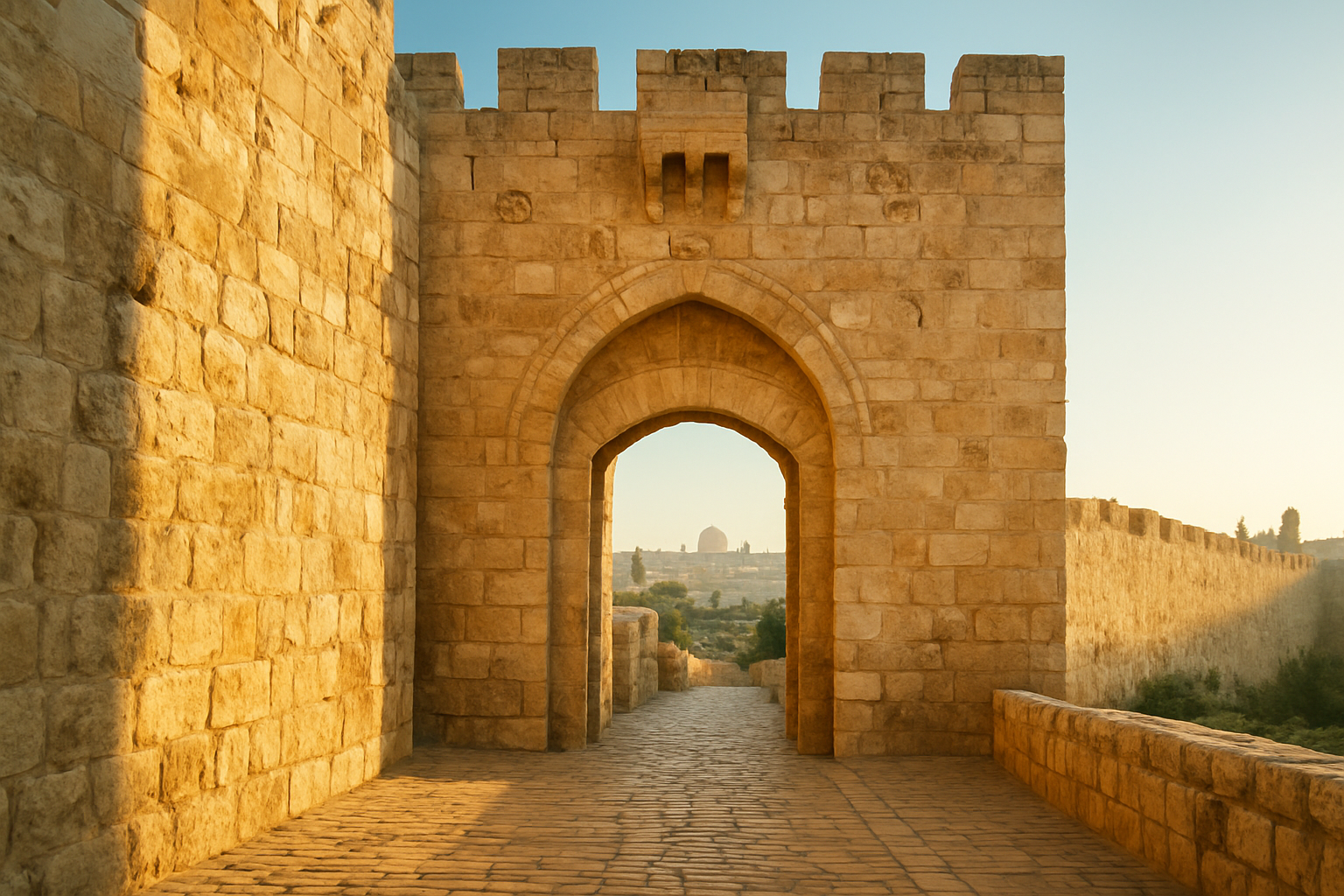
Olive harvests in Israel are not only agricultural—they are theological. Olives are everywhere: public trees outside apartment buildings, groves in national parks, and ancient trees by archaeological ruins. We harvested in Sderot, among kibbutzim along the Gaza border, and in Ashkelon National Park beside a Canaanite gate that dates back 3,500 years—places that bind history, land, and people.
"And a shoot will come out from the stump of Jesse, and a branch will grow out of his roots." — Romans 11:17-18 (paraphrase applied)
Behind the Words: Romans 11 uses the image of root and branch to describe the relationship between Israel and the nations. Paul was addressing Gentile believers about humility and gratitude toward the root—Israel’s covenant story.
The Heart of It: Working the land together teaches us that branches do not support the root; the root nourishes branches—an image calling us to mutual humility.
Try This: Picture 18 people—chosen because 18 in Hebrew spells chai, life—standing under olive trees at dawn. They are strangers until they are not: hands learn the rhythm of shaking branches, laughter over stubborn nets, a simple meal shared on the ground. A local historian tells family stories; prayer rises from people who had never prayed together before.
The Heart of It: Sacred work heals suspicion.
Behind the Words: Practical, shared labor disarms rhetoric and opens people to one another. When Christians and Jews harvest olives from public trees—trees that are part of everyday life, not property disputes—everyone learns the geography of one another’s grief and hope.
Try This: Organize a small team to harvest a public grove; use your time to listen to local leaders, attend a Sabbath meal, and bring your hands to work.
There is a theological image in olive oil: anointing, light, and nourishment. The oil pressed from the harvest becomes a tangible bridge—anointing oil in special jars, oil pressed from trees harvested together and sold to fund local social programs. That end-to-end connection—harvest to healing—is faith-informed development that refuses to reduce spiritual solidarity to profit.
A vivid example: someone once packed three 70-pound suitcases with baby formula—Hebrew labels and all—and brought them to churches in a U.S. city during an American shortage. Those cans ended up on Israeli Christian kitchen counters, small emblems of a relationship that went beyond donations and into hospitality. Olive harvests can produce the same small but holy traces of mutual care.
There’s a deeper, strategic reason to prefer shared, service-based presence: in areas marked by trauma and anger, small wins—new schools, a rebuilt clinic, a meal shared—begin to loosen narratives that have hardened hearts for generations.
When the land and faith meet: caring for at-risk youth after conflict
The daily, grinding reality of life near the border is written into children's bodies and rhythms. Bomb shelters are part of architecture; new school buildings are designed as shelters. Children who once played in streets now carry the weight of loss and fear. How do we respond in ways that are faithful, practical, and sustaining?
The Heart of It: Trauma requires presence and structure, not platitudes.
Behind the Words: Children who live with recurring threat need stable relationships, safe spaces, and routines that train hope into habit. Presence—consistent, ordinary, and loving—rebuilds a child's sense of the world as predictable.
Try This: Sponsor recurring mentorship hours in a community center, fund a structured after-school program, or partner with a local program that has credibility on the ground.
One clear, heartbreaking detail helps us see the need: a building designed as a bomb shelter took a direct rocket hit—proper construction kept it intact, but the memory of the hit remains. That kind of living memory changes parenting. Families already fragile became more strained; single-parent households, orphaned children, and homes where grief had no end multiplied.
Teaching Moment 1
Behind the Words: Ephesians 2 speaks of God making peace and breaking down dividing walls between people. Paul wrote to a church split by ethnicity and class; his words were meant to convert theological division into practical unity in worship and witness.
The Heart of It: Peace is both a gift and a task—God gives it, and we must live it out in action.
Try This: Imagine a children’s courtyard in a border town after school: three volunteers who come every week to teach art, two local counselors, and a circle of kids who begin with drawing and end by telling stories. Over months, the courtyard becomes a place where anxiety softens into routine. That is peacemaking in small steps.
One common misunderstanding is that trauma can be fixed quickly with a single gift or one-time mission trip. The work is long; resilience is a muscle built by consistent presence.
We can partner with local programs that already serve at-risk youth. Don’t parachute solutions; fund shelter-ready buildings, staff counseling, and social-employment schemes that keep teenagers engaged. Where possible, match presence with cultural respect: hire local teachers, learn local rhythms, and let communities guide priorities.
Teaching Moment 2
Behind the Words: Genesis 12:3 promised that families of the earth would be blessed through the Abrahamic line. In its ancient context this was a vow that Israel’s relationship with God would radiate blessing internationally.
The Heart of It: Blessing is outward-moving; it doesn’t hoard favor but sends it out.
Try This: Picture a rebuilding team that brings both materials and mentorship—engineers who help fortify a school and teachers who offer tutoring. A child sits in a repaired classroom and reaches for a book she never dared touch before. That is blessing becoming visible.
Blessing is not simply giving things; it primarily means enabling people to flourish with dignity and agency.
We cannot pretend that rebuilding is easy or that hearts change overnight. Yet prayer, relationship, and tangible acts of service are not sentimental placeholders—they are instruments God uses to transform communities.
If you wonder where to start: pray, then listen. Turn prayer into presence. Choose one local partner, one community center, or one grove to harvest—and go. When Christians and Jews stand shoulder to shoulder harvesting olives, praying over families at kitchen tables, and repairing schoolrooms designed as shelters, we do more than fix things. We model a different story: one where life is chosen, love is practiced, and hate is not celebrated.
We will wrestle with hard sayings—the painful truth that some ministries have treated supporters as a cash source. That critique is a call to integrity. Let us be people who give with our hands, our schedules, and our prayers. Let us be a people who, when offered a suitcase of formula or a bag of olives, treat those humble gifts as the start of faithful friendship. As we do, we help make the ground a little firmer for every child to stand on.
If you’d like to be part of this work, begin by asking: Who are we choosing to bless this year, and what will we do to keep showing up? Ask that question with prayer—and then with hands ready to work.
Key Takeaways
- Engaging in interfaith dialogue can build understanding and support.
- Prayer is a powerful tool for peace and reconciliation.
- Supporting humanitarian efforts is crucial in conflict zones.
- Community-centered initiatives can help heal and rebuild societies.
- Love and understanding can combat hate and extremism.
Notable Quotes
"Christians show the love of Jesus and embody the love of Jesus."
"The solution for peace in Gaza is Jesus."
"The greatest blessing is first to turn to our God in prayer."