After the Uniform: Caring for Veterans
Service changes a person. Learn how churches and communities can walk with veterans through transition, suicide prevention, and real volunteer action.
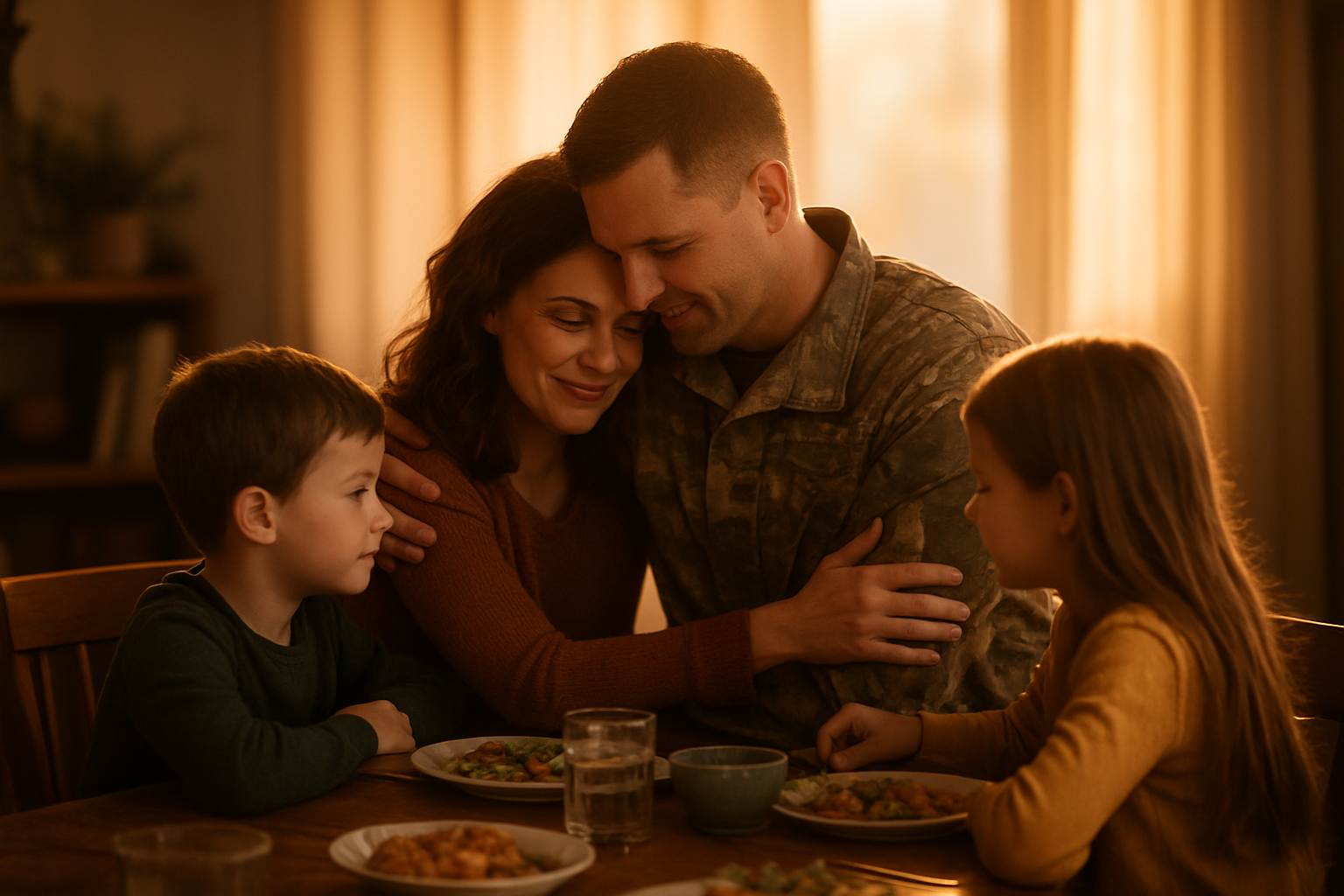
Why is the transition from military to civilian life so hard?
The transition is not a short bridge to cross; it’s a new landscape altogether. Training rewires rhythms—one speaker said, "I don't think people even understand what one week in bootcamp does to a person's brain." That line captures how quickly normal markers of identity are reshaped. The uniform gave structure, purpose, and a clear community. Leaving it can feel like being stripped of a language you once spoke fluently.
Practical disorientation breeds isolation. It appears in mundane ways: trouble translating military experience to a civilian resume, losing daily camaraderie, parenting in a neighborhood where most families have never moved schools three times in five years.
The Heart of It: The loss of role and reliable community is what makes transition dangerous.
Behind the Words: Leaving active duty often removes the systems that once scaffolded identity—missions, teams, and clear stakes. Without those, grief and aimlessness can grow.
Try This: Imagine a small Saturday morning group at your church: coffee, a veteran walks in, a former squadmate leads a conversation about the frustrations of navigating VA paperwork. Not a pity party—an exchange of practical help. That kind of tiny, regular community is a lifeline.
Behind the Words: Psalm 23 comforts a people who wandered, feared, and faced death’s shadow. It's not a promise of smooth roads but of God's presence amid dark valleys.
"Even though I walk through the valley of the shadow of death, I will fear no evil; for You are with me." — Psalm 23:4
The Heart of It: God’s presence does not remove the valley, but it changes who walks with us in it.
Try This: Picture a veteran at the kitchen table, staring at a stack of bills after separation orders were signed. Instead of urging him to move on, a neighbor says, "Bring the kids Saturday; we'll sort the paperwork and grill dinner while we do it." The neighbor shows up as God’s presence in small, steady action.
A common misunderstanding is that practical help is the same as spiritual care. It isn’t. Both are necessary. We must be ready to offer both.
Transition is also cognitive. Hypervigilance—being "prepared"—gets labeled paranoia by those who have never had to watch a perimeter. Returning to civilian life can feel like trying to sleep with the lights out when your brain still expects the night watch.
The Church can respond by learning enough military time, terms, and trauma language to build trust. We don’t need to be experts; we need to be reliable neighbors who won’t vanish when life gets complicated.
How can the church better support veterans and their families?
Posture matters. The Church can compound pain with criticism or become an adopting family. One blunt conviction emerged: veterans and military spouses are not just someone who had a regular job. That means congregations must stop treating military service as a footnote and start treating service and sacrifice as pastoral concerns.
Begin with listening. Invite veterans to tell their stories without forcing them. Teach staff that frequent moves and unpredictable schedules make military families uniquely vulnerable—children who change schools, spouses who carry the household while a partner deploys, families who may grieve the loss of a parent.
The Heart of It: The Church is called to be a landing place—steady, practical, and spiritually nourishing—for those coming off the battlefield.
Behind the Words: In Acts, the early church practiced hospitality and material care so believers could flourish together; this wasn’t mere social work, it was gospel-shaped neighborliness.
Try This: Offer a monthly "veteran table"—not a labeled program but a raw table where veterans and families eat, talk, and receive help translating benefits or finding counselors.
One concrete model in the community is the Hunt for Life Foundation’s camp for boys who lost their fathers. That camp illustrates a Church-shaped response that invests long-term in grieving children. It says, collectively, we will show up for the ones who lost a parent in service.
Scripture roots this work. Jesus invites the weary to Himself—not a posterized solution but an invitation to carry burdens together.
"Come to me, all you who labor and are heavy laden, and I will give you rest." — Matthew 11:28
The Heart of It: Rest is relational—Jesus offers Himself as the meeting place for our weariness.
Try This: Picture a military spouse whose husband is deployed. She receives a message from a small group offering childcare for a hospital visit and a week of meal deliveries. Those practical supports become theological: they speak of God's care in tangible ways.
We must not ignore the family. Children of military families bear layers of loss that look ordinary to outsiders. Advocate for school systems to recognize and support those kids, and within congregations host mentoring and tutoring that stabilizes their lives.
Finally, speak prophetically to society. One hard saying should prick our conscience: it "seems almost demonic in a sense... to make these men and women who fight for our nation feel the most unappreciated in our nation." If we don’t treat service with gratitude and care, we fail both justice and mercy.
What volunteer opportunities actually help veterans right now?
If you want to help, move from sentiment to strategy. Volunteerism is not just time poured out; it’s time tied to the actual needs veterans and families face. Start by asking: what gaps exist in your community? Are veterans falling through the cracks in mental health access? Are military spouses isolated during deployments? Are children missing stability?
One tangible avenue is mentoring programs for boys who lost fathers. The Hunt for Life Foundation’s camp was designed to teach integrity, resilience, and spiritual formation—practical mentoring that shows boys what it looks like to be a real man. That model translates into year-round mentorship where volunteers commit to monthly check-ins and modeled presence.
The Heart of It: Sustained, ordinary presence beats a single heroic event every time.
Behind the Words: A one-time fundraiser helps money flow, but long-term volunteering builds trust and counteracts isolation.
Try This: A volunteer signs up for a weekly phone call with a veteran spouse—helping with paperwork questions, asking about the kids, and being a steady voice.
Another immediate need is education and navigation help. Many veterans don’t know where to find benefits or counseling—community channels often remain hidden. Volunteers can support a local resource hub by curating services, hosting informational nights, or offering technical help to keep channels updated.
We must also face a painful fact directly. The stark, convicting line we must hear is this: "22 veterans commit suicide every day." Those words demand more than a moment of silence. They require mobilization.
Try This: Envision a small coalition of churches partnering with local veteran groups to provide weekend respite housing, transport to counseling, and a crisis call list. Volunteers rotate so the veteran always has a human on the other end of the line.
Coordination matters. In one community effort, goods and letters were sent to veterans in partnership with civic groups—cross-community work multiplies impact.
Finally, remember that storytelling matters. Fiction and testimony can increase awareness by making the hidden visible. Encouraging reading groups, hosting conversations, or sharing testimony nights helps people move from abstract statistics to real faces.
We are not helpless. We can learn the language, build steady places to land, and volunteer in ways that keep doors open for veterans and their families.
Start by listening this week. Ask a veteran in your church what would help them: a referral, a ride, or a neighbor who shows up faithfully for six months. Consider joining or supporting mentorship programs that follow the camp-model, or connect with local efforts to create a resource hub—a church-run navigation desk or an online channel curated for veterans.
Above all, let gratitude move us to action. When we practice true shalom—peace, prosperity, and health for the household—we live out the gospel in a way that honors those who have given so much. Let’s be the people who stay.
Key Takeaways
- Communities and churches must actively support veterans to ease their transition.
- Awareness about veteran mental health and suicide should be increased.
- Engagement in volunteer opportunities can significantly impact veterans’ lives.
- Dani Pettrey's book provides insight into the struggles of veterans and families.
- Mentorship programs can help youth cope with loss and guide them spiritually.
Notable Quotes
"22 veterans commit suicide every day, and it breaks my heart."
"I think that's a place that the church can love on the military, veterans, that they're not just someone that had a regular job."
"This camp can't replace the father in the home, but what we can do is show them how the heavenly father will always be with them."